If you’re shopping for a roof on Long Island and you’ve been looking at anything beyond standard asphalt shingles, synthetic slate roofing has probably come up. I spend most of my weeks on roofs across Nassau and Suffolk Counties helping homeowners figure out which roofing materials actually make sense for their house, their budget, and our local weather. This article breaks down a real head-to-head comparison of the synthetic slate options we install, specifically Brava Roof Tile and GAF Slateline, against natural slate and cedar shake.
Here’s the short version: for most Long Island homes, synthetic slate is the best balance of cost, durability, and long term performance. Brava is the premium option if you want a showpiece roof that can handle anything our climate throws at it, and Slateline is the budget-friendly way to get that slate look without a major investment. Natural slate is incredible but comes with serious weight and cost considerations, and cedar shake looks beautiful until salt air and humidity start winning.
CLICK NUMBER TO CALL
OR
Understanding Synthetic Slate Roofing
Before we get into numbers and comparisons, let’s make sure we’re speaking the same language. “Synthetic slate,” “composite slate,” and “slate-look roofing” all describe roofing tiles that are manufactured to mimic the appearance of quarried slate using engineered materials instead of natural stone. They look like the real thing from the street, but they’re built very differently under the surface.
What Synthetic Slate Is Made Of (and How It’s Different from Real Slate)
Synthetic slate is typically made from recycled plastics, rubber polymers, or concrete composites. Most products blend recycled rubber, polymers, limestone dust, and other fillers, then add UV inhibitors and impact modifiers before molding each tile to replicate the texture, edges, and color variation of quarried stone. Good quality synthetic slates are engineered with UV inhibitors to improve weather resistance and prevent premature fading. Many synthetic slate products are made from recycled materials, with brands like EcoStar using up to 80% recycled materials in its products. Overall, synthetic slate can contain up to 80% recycled materials.
A natural slate roof, by contrast, is quarried slate, meaning actual natural stone pulled from the earth. It’s extremely dense, heavy, and while beautiful, it’s brittle under point impact and labor-intensive to install. The weight difference alone is significant: synthetic slate weighs about 300 pounds per square (that’s per 100 square feet of roof area), while natural slate often lands between 800 and 1,000+ pounds per square.
What does that weight gap mean for most homes? Unlike natural slate, synthetic slate requires no structural reinforcement for most homes. If your house currently carries architectural asphalt shingles (typically 200 to 300 lbs per square), stepping up to synthetic slate tiles at around 300 lbs per square is usually within your existing framing’s capacity. Natural slate, on the other hand, almost always demands an engineer’s review and potentially thousands of dollars in structural upgrades for a typical Long Island home built between the 1950s and 1990s.
CLICK NUMBER TO CALL
OR
Key Players on Long Island Roofs: Brava, GAF Slateline, Natural Slate, and Cedar Shake
Let me introduce the four roofing materials we’re comparing, because they’re not all in the same category even though homeowners often lump them together.
Brava Roof Tile is a premium composite slate option we install regularly. Their Old World Slate line offers multi-color blends, class 4 impact resistance (the highest rating available), and wind ratings up to 188 mph with ring-shank nails or up to 211 mph with screw installation. Brava synthetic slate can withstand winds up to 188 MPH in standard configurations. It’s a high quality synthetic slate that looks remarkably close to the real thing. Other premium brands in the synthetic space include DaVinci Roofscapes, a leading synthetic slate brand, and CertainTeed’s Symphony slate, which combines aesthetics with durability.
GAF Slateline is a designer asphalt shingle with a slate-style profile. It’s not a true composite slate but rather an upgraded asphalt product engineered to give you a slate-like appearance at a fraction of the cost. It carries a Class A fire rating and UL 2218 Class 4 impact rating, with wind resistance up to 130 mph.
Natural slate roofs are a niche, high-end choice you’ll see on historic homes and luxury estates across the Northeast. They’re stunning and can last over a century, but the high cost and structural demands make them impractical for many Long Island homeowners.
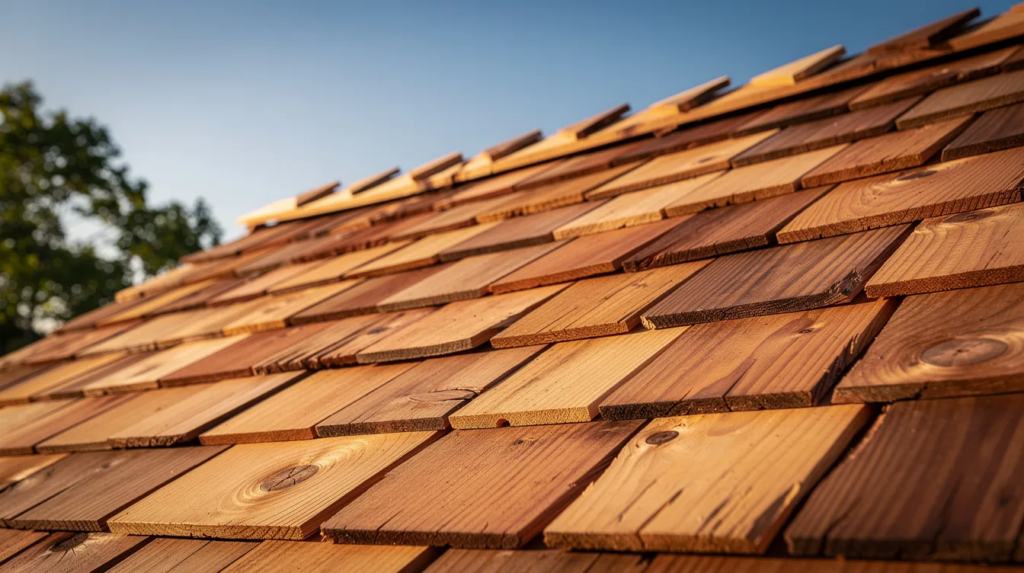
Cedar shake roofs, primarily western red cedar, remain a traditional option for coastal or cottage aesthetics. They’re beautiful natural materials, but wood is wood. It’s subject to moisture, rot, insects, UV degradation, and salt spray, all of which Long Island delivers in abundance, so it’s important to understand cedar shake roofing cost, lifespan, and maintenance before committing to this material.
Now that the materials are clear, let’s look at how they actually behave on real Long Island houses dealing with our specific climate challenges.
How Synthetic Slate Performs on Long Island Homes
Picking roofing materials based only on how they look in a showroom is a mistake I see homeowners make all the time. What matters is how those materials perform when a nor’easter rolls through, when January delivers five freeze thaw cycles in two weeks, and when salt air is eating at everything on your property 365 days a year.
Weather Performance: Freeze Thaw Cycles, Nor’easters, and Coastal Humidity
Long Island’s climate is uniquely tough on roofs. We get winter freeze thaw cycles where temperatures swing above and below freezing repeatedly, nor’easters with heavy snow and driving rain, occasional nor’easter-force winds, and year-round salt air exposure along both the ocean and Long Island Sound sides.
Synthetic slate handles these harsh weather conditions exceptionally well. Because composite slate doesn’t absorb water the way natural materials do, it resists the cracking and spalling that freeze thaw cycles cause in quarried slate. Brava’s products, for example, are tested from -40°F to +180°F without cracking, crazing, or delamination. Synthetic slate is engineered to resist cracking and fading over decades of exposure.
Wind ratings deserve your attention. Brava can handle winds up to 188 to 211 mph depending on fastener type, which is well beyond what even the strongest nor’easter would bring to Nassau or Suffolk County. Slateline’s 130 mph rating is solid for most Long Island exposures when installed correctly with proper starter strips and high-wind fastening patterns. Both products can withstand high winds that would damage cedar or dislodge poorly maintained natural slate.
Cedar shake is where harsh weather really takes its toll. In damp coastal air, cedar can swell, cup, split, and curl without vigilant maintenance. South and east-facing slopes near the ocean degrade fastest. Data from Hamptons roofing contractors shows ocean-facing cedar lasting as little as 20 to 25 years versus 35+ years on more sheltered slopes. Composites stay more dimensionally stable regardless of orientation.
Weight and Structural Considerations for Long Island Houses
This is where I gotta be real with you, because weight is the factor that catches the most homeowners off guard.
Here are the approximate weights you’re working with:
- Brava composite slate: about 300 pounds per square (similar to heavier architectural asphalt shingles)
- GAF Slateline: approximately 230 to 250 pounds per square (in line with premium asphalt)
- Natural slate: roughly 800 to 1,000+ pounds per square depending on thickness
- Cedar shake: around 250 to 400 pounds per square depending on shake thickness
Most Long Island colonials, capes, and ranches built from the 1950s through the 1990s were framed to carry standard asphalt shingle loads plus snow and wind. That means most homes can support synthetic slate without structural modifications. Synthetic slate tiles are lightweight, which makes transport and installation easier and keeps your framing costs at zero in most cases.
Natural slate is a different story entirely. At 800 to 1,000+ lbs per square, you’re looking at three to four times the load your roof was designed for. That usually means an engineer’s review, possibly upgrading rafters, reinforcing the roof deck, and sometimes even addressing framing all the way down to the foundation. We’re talking thousands to tens of thousands of dollars before a single piece of slate goes on. When I tell people natural slate is beautiful but their structure and budget can’t carry it, I’m doing them a favor.

CLICK NUMBER TO CALL
OR
Maintenance Needs Over 20 to 50 Years
Synthetic slate keeps maintenance simple: annual inspections, clearing debris, checking flashings and fasteners after major storms, and occasional moss or algae removal. Synthetic surfaces are less hospitable to growth than wood, though Long Island’s shade and humidity mean you should still keep an eye on north-facing slopes, and be mindful of signs you may need a full roof replacement and other common roof problems and quick fixes. Brava’s warranty even covers color fade greater than 4 Hunter delta-E units in the first 10 years.
Slateline maintenance is similar to any high-end asphalt product. You’ll deal with granule loss over time, potential algae on shaded areas, and eventual wind damage as the shingles age. Expect to think about replacement around the 30 to 40 year mark.
Cedar shake is the high-maintenance option. Regular cleaning, staining, insect and fungus treatments, and individual shake replacement are all part of ownership. Moisture retention, salt exposure, and shade drastically reduce lifespan. If you’re not willing to invest time and money in ongoing upkeep, cedar will disappoint you.
Natural slate needs periodic replacement of individual slate tiles, complex flashing maintenance, and specialty labor from experienced slaters who charge premium rates. The stone itself doesn’t fade, but edges chip and spall under hail or impact.
The availability and cost of qualified repair labor also matters. Finding a natural slate or cedar specialist on Long Island isn’t always easy. A composite-certified crew like ours at Rapid Roofing can handle synthetic slate repairs more readily and at lower cost.
Bottom line: for long term performance on Long Island, synthetic slate is well suited to our climate and wins on maintenance for most homeowners.
Lifespan, and Warranty: Brava vs Slateline vs Slate vs Cedar
All the numbers below are typical ballparks for Nassau and Suffolk County as of 2026, installed by a licensed, insured contractor doing a proper tear-off and code-compliant installation. Your actual cost depends on your specific roof.
Expected Lifespan and Manufacturer Warranties
Here’s what you can realistically expect with proper installation and maintenance:
- Brava: 50+ years of service life. Synthetic slate roofs can last 40 to 50 years, and Brava backs theirs with a 50-year limited warranty covering manufacturing defects and color fade. Synthetic slate typically offers warranties ranging from 50 years to lifetime coverage.
- Slateline: 30 to 40 years. GAF offers a lifetime limited warranty with non-prorated material and installation labor coverage during the initial period, plus enhanced coverage when installed by credentialed contractors.
- Natural slate: 75 to 100+ years with proper maintenance. Warranties are typically limited to manufacturer defects; labor warranties vary by installer.
- Cedar shake: 25 to 35 years on Long Island, highly dependent on care and exposure. Material warranties are shorter with many exclusions tied to maintenance, moisture, and insect damage.
One thing I always tell people: “lifetime” in roofing warranty language almost never means your lifetime. It refers to a defined coverage period with specific terms, exclusions, and proration schedules. Read the fine print, or better yet, have your contractor walk you through it.
A synthetic slate roof’s performance can be affected by proper installation techniques. Improper installation can void the manufacturer’s warranty, which is why who installs your roof matters as much as what goes on it.
Which Roof Type Fits Which Long Island Home?
First things first, let me walk through the scenarios I see most often:
“This is our forever home and we want a showpiece roof that laughs at storms.”
Choose synthetic slate from Brava. You get the authentic look of traditional slate, class 4 impact resistance, wind ratings that exceed nor’easter force, and a 50-year warranty. The weight works on most homes without structural reinforcement, and maintenance is minimal. For most Long Island homeowners planning to stay 20 to 50+ years, this is the best long term value proposition.
“We plan to stay about 20 years and want a big curb appeal upgrade without breaking the bank.”
Slateline is your move. It delivers that slate roof aesthetic at roughly half the cost of Brava and represents a significant upgrade over basic architectural roofing shingles used on many Long Island homes. You could also consider Brava selectively on front-facing slopes and Slateline on the back for a blended approach that maximizes your home’s curb appeal where it counts.
“We own an older historic home with the structure to support it and a large budget.”
A natural slate roof is the authentic choice, and it’s appropriate when the structure was built for that weight, the home is in a historic district, or you simply want natural stone and have the budget. Just know that slate roof tiles require specialty installation labor that costs significantly more and takes longer.
“We’re drawn to that Hamptons cottage look but don’t want constant maintenance.”
Cedar shake aesthetics are gorgeous, but the reality of maintaining cedar in salty, humid Long Island air is demanding. Consider a synthetic cedar shake alternative like Brava’s cedar profile. You get the warm, natural appearance without the rot, insects, and annual treatments.
CLICK NUMBER TO CALL
OR
Installation, Timeline, and What Working with Rapid Roofing Looks Like
Choosing the right product is half the battle. The other half is installation quality, which is what actually keeps water out of your house for decades.
The Basic Installation Process for a Synthetic Slate Roof
Here’s what a typical synthetic slate or Slateline installation looks like from start to finish:
- Inspection and estimate: We evaluate your existing roof, decking condition, framing capacity, ventilation, and flashing. This is where we determine if your home needs any substrate repairs before new roofing goes on.
- Tear-off: Remove existing roofing materials down to the deck. Inspect and repair any damaged decking or substrate.
- Underlayment and ice shield: Install ice and water shield at eaves, valleys, and around all penetrations. Lay synthetic underlayment across the full deck per manufacturer specs.
- Flashing installation: Metal flashings at chimneys, ridge tiles, valleys, skylights, and wall transitions. Synthetic slate may require specific trim profiles.
- Tile installation: Fasten synthetic slate tiles or Slateline shingles per manufacturer specifications. Brava requires two fasteners per tile; high-wind installations may use screws for maximum wind warranty. Synthetic slate tiles can be easily cut on-site using standard tools, and synthetic roofing generally produces predictable courses and coverage due to standardized dimensions. Synthetic slate installation uses standard roofing techniques familiar to experienced crews.
- Ridge cap, final flashing, gutters, and cleanup: Complete ridge details, connect gutters, do a full cleanup and final inspection.
Realistic timeline for a typical 20 to 30 square Long Island roof can vary based on size, complexity, and weather, but the overall duration of a roof replacement project is often shorter than homeowners expect, especially when you prepare your house properly for a roof replacement.
Realistic timeline for a typical 20 to 30 square Long Island roof:
- Slateline: 2 to 4 days
- Brava synthetic slate: 3 to 5 days
- Natural slate: 5 to 7+ days
- Cedar shake: 5 to 7+ days
Synthetic slate installation is faster than natural slate and cedar, which translates directly to lower labor costs and less disruption to your household, especially when your contractor follows a clear, simple 5-step roofing process from consultation through final walkthrough.
Financing, Permits, and Insurance Details
We help homeowners navigate town permits in both Nassau and Suffolk Counties and handle required inspections so you don’t have to chase paperwork. Every municipality on Long Island has its own permit requirements, and we manage that process start to finish.
For premium roofs like Brava, we offer financing options that can spread the cost into manageable monthly payments. A mid-size synthetic slate project might break down to a few hundred dollars per month depending on term length and credit. We’ll walk through the specifics during your assessment.
I also encourage every homeowner to have us review their insurance policy. Many carriers offer discounts for impact-resistant (Class 4) and fire-rated (Class A) roofing products. On a coastal Long Island home, those savings can add up over the life of the roof, especially when you pair them with the stress-free roofing experience Rapid Roofing is known for and a roof replacement guide for Long Island homeowners so you understand every step.
Why Use a Local Long Island Roofing Contractor for Synthetic Slate
Reading spec sheets is not the same as knowing how salt air corrodes fasteners at the shoreline, where ice dams form on north-facing dormers, or which towns have specific coastal building code requirements. Local experience matters more than any brochure.
Rapid Roofing is an Owens Corning Platinum contractor, and we’re experienced installers of both GAF Slateline and Brava composite products. Those credentials matter because they directly affect your warranty coverage and the quality of workmanship on your roof.
Avoid out-of-town storm-chaser contractors who show up after a nor’easter pushing whatever product they have on the truck. They won’t be around when you need warranty service, and they often don’t follow the fastener specs, flashing details, or underlayment requirements that keep your roof performing for decades, classic patterns you’ll recognize once you know how to spot common roofing scams on Long Island.
Let’s Wrap Things Up
For most Long Island homeowners, synthetic slate delivers the best combination of the authentic look of traditional slate, strong performance against our harsh weather, manageable weight for existing structures, and reasonable lifetime cost. Brava is the premium choice for forever homes and storm-prone locations, and Slateline is an excellent upgrade for homeowners who want better than basic asphalt without the full composite price tag. Natural slate remains the gold standard for authenticity and longevity but only when the structure and budget support it. Cedar shake offers unmatched charm but demands more maintenance than most people realize in our coastal climate.
Here’s what to do next:
- Gather a few recent photos of your current roof, including close-ups of any problem areas
- Define your budget range and how long you plan to stay in the home
- Schedule an in-person assessment so we can evaluate your decking, framing, and ventilation
- Ask to see side-by-side Brava and Slateline samples so you can compare the look and feel in person
If you’re thinking about related upgrades, topics like roof ventilation, attic insulation, and skylight installation are worth exploring at the same time, since they all interact with your roofing system and are easiest to address during a replacement, and they help prevent many common roof problems on Long Island homes.
Ready to figure out which roof makes sense for your house? Book a free, no-obligation roofing assessment with Rapid Roofing. We’ll come out, look at your roof, give you honest recommendations with clear numbers, and you can decide on your own timeline. No pressure, just straight answers.
Frequently Asked Questions
Is synthetic slate roofing really cheaper than natural slate on Long Island?
Yes, significantly. Synthetic slate costs between $9 and $16 per square foot installed, while natural slate costs between $20 and $40 per square foot. Once you factor in the structural reinforcement that natural slate usually requires on Long Island homes, synthetic slate often comes in at less than half the total project cost.
How long does a synthetic slate roof like Brava actually last in our climate?
Synthetic slate roofs can last 40 to 50 years with proper installation, and Brava backs their product with a 50-year limited material warranty. On Long Island specifically, proper ventilation, correct flashing details, and quality underlayment are what ensure you actually reach that full lifespan.
Will my home need extra structural support for synthetic slate tiles?
Most homes that currently carry architectural asphalt shingles can also handle synthetic slate without additional framing, since most synthetic slate weighs around 300 pounds per square. That said, we always check your decking and framing condition before finalizing a quote because every house is different.
How does synthetic slate hold up to nor'easters?
High quality synthetic slate products are tested to handle extreme conditions. Brava synthetic slate can withstand winds up to 188 mph with ring-shank nails and carries a Class 4 impact resistance rating, the highest available. Real-world performance depends on proper fastening patterns, starter courses, and ridge details, which is why installer quality matters as much as the product.
Can synthetic slate roofing increase my home's resale value?
Premium roofing with strong curb appeal, long warranties, and verified impact and fire ratings gives buyers confidence that they won’t face a costly roof replacement soon after purchase. The exact ROI depends on your neighborhood and overall home condition, but a durable, attractive synthetic slate roof is consistently viewed as a selling point on Long Island.
Is cedar shake still a good idea for a coastal Long Island home?
Cedar can look beautiful, but it requires significantly more maintenance in salty, humid air, including regular staining, treatments, and individual shake replacement. Many Long Island homeowners who love that look are now choosing composite alternatives like Brava’s cedar shake profile to get the aesthetic without the upkeep burden and shorter lifespan, or turning to experienced installers of Brava cedar shake roofs in Suffolk County and premium cedar shingle replacements in the Hamptons when they want that coastal look done right.
Can I finance a synthetic slate roof with Rapid Roofing?
Yes, Rapid Roofing offers financing options for both Brava and Slateline roofs. Depending on your project size and terms, monthly payments for a mid-size synthetic slate installation can be structured to fit a range of budgets. We’ll walk through the specifics and give you clear numbers during a free assessment.
How do I know if Brava or Slateline is the better choice for my house?
It comes down to three things: your budget, how long you plan to stay, and your aesthetic priorities. Brava is the better investment for long-term homeowners who want maximum durability and the closest match to real slate. Slateline makes more sense for budget-conscious upgrades or shorter ownership timelines. The best way to decide is an in-person consult where we can show you samples and run both sets of numbers side by side for your specific roof.