
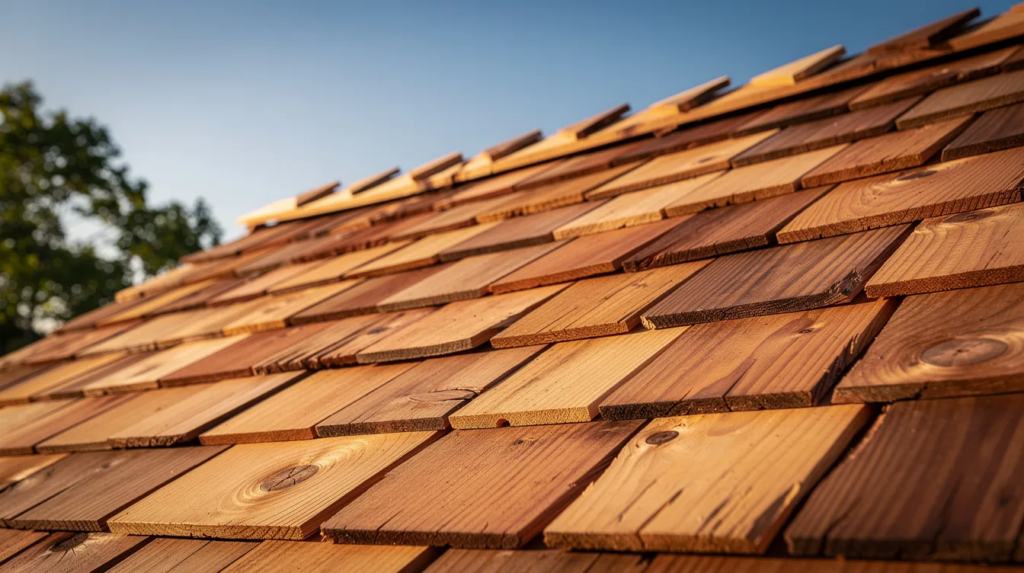
A cedar shake roof typically lasts between 18 and 40 years, with the exact cedar shake roof lifespan depending on shake thickness, whether the wood is treated, how well the roof is maintained, and how much salt air and moisture it faces. On Long Island and in the Hamptons, where ocean exposure and humid summers are the norm, many homeowners see their cedar roofs reach 20 to 30 years with proper maintenance, while neglected or untreated roofs can fail in under 20 years.
This guide explores cedar shake roof lifespan specifically for Nassau and Suffolk County homes. National averages do not capture the accelerated wear that Long Island’s coastal climate inflicts on natural wood roofing. Whether you already have a cedar roof aging in the salt air or you are weighing cedar against alternative roofing materials for a new roof, understanding local conditions is essential for budgeting, protecting your home’s value, and preventing water damage before it starts.
Cedar shake roofs can last 20 to 30 years with proper maintenance, but without regular upkeep, that number drops to 15 to 20 years. Climate and weather conditions significantly impact the lifespan of cedar shake roofs, making Long Island one of the more demanding environments for this premium material.
CLICK NUMBER TO CALL
OR
Understanding Cedar Shake Roof Lifespan
A cedar shake roof is made from thick, split or resawn wooden roofing elements, usually Western Red Cedar, installed in overlapping courses. “Lifespan” here means the number of years until the roof needs major replacement due to widespread failure (soft wood, persistent leaks, compromised structural integrity) rather than simple cosmetic aging like the silver-gray patina that many homeowners appreciate.
The numbers in this article are typical ranges, not guarantees. Workmanship, ventilation, and maintenance can swing a cedar roof’s useful life by a full decade or more in either direction. Proper installation quality is critical for extending the life of a cedar shake roof, and a steep roof with good ventilation can enhance longevity well beyond average figures.
Shakes vs Shingles: How Product Type Affects Years of Service
Cedar shakes and cedar shingles are not the same product. Cedar shakes are thicker (often 3/4 inch or more at the butt), with at least one hand-split face that exposes the natural wood grain. Cedar shingles are thinner, sawn smooth on both sides, and produce a flatter, more refined profile. The thicker, rougher texture of a shake roof gives it more mass to resist weather, but cedar shingle roofs offer a cleaner aesthetic at the cost of durability.
On Long Island, typical lifespan ranges by product look like this:
- Medium split shakes in coastal Suffolk exposure: roughly 18 to 25 years with average care
- Heavy split and resawn shakes, treated or premium grade: often 25 to 35 years when well maintained
- Cedar shingles (thinner, sawn): more like 15 to 25 years in the same climate, and sometimes shorter under heavy shade or salt exposure
Why does thickness matter so much? A thicker shake has more real wood to sacrifice before moisture, UV exposure, and splitting reach the critical point. Premium-grade cedar shakes resist decay better than lower-grade options because they contain more heartwood with tighter grain, which holds up far longer against cupping, cracking, and fastener pull-through. Vertical or edge grain shakes warp and curl less than flat grain, adding years before the wood surface deteriorates enough to compromise the roof.
Treated vs Untreated Cedar: Preservatives, Fire Ratings, and Longevity
“Treated” cedar shakes have been factory impregnated under pressure with preservatives (fungicide, water repellent) or fire retardants. “Untreated” cedar relies solely on the wood’s natural oils and heartwood chemistry to resist decay and insects. Cedar has natural oils that help resist insects and decay, but in a demanding coastal environment, those natural defenses are not always enough.
Lifespan tendencies differ meaningfully:
- Untreated cedar in salty coastal exposure: often 15 to 22 years if maintenance is inconsistent. Moisture exposure is a leading cause of cedar roof failure, and untreated wood in a salt-laden environment absorbs and holds moisture faster.
- Preservative treated cedar: commonly extends serviceable life by 3 to 7 years when paired with good upkeep, because the treatment slows the fungal decay and moisture absorption that end most cedar roofs early.
Thickness Grades: Medium, Heavy, and Tapersawn
Common thickness classifications include:
- Medium shakes: approximately 1/2 to 3/4 inch thick at the butt, lighter weight, suitable for moderate exposure
- Heavy shakes: 3/4 inch and thicker, greater mass, more resistant to cupping, splitting, and wind damage
- Tapersawn shakes: a hybrid with one split face and sawn surfaces, thicker than wood shingles but with a more uniform profile
On ocean-facing properties in Montauk, Sagaponack, or the South Fork, Rapid Roofing consistently recommends heavy or premium heart-grade shakes. In these high-exposure locations, medium shakes tend to lose structural integrity and cup faster, often failing around 18 to 20 years. Heavy shakes in the same conditions frequently reach the late 20s or 30-plus years. For more sheltered inland homes, medium shakes can perform adequately and keep costs reasonable.
Even the best product, however, will age faster in Long Island’s coastal environment without proper design and care. The next section covers exactly how the local climate pushes cedar shake roof lifespan toward the low end of these ranges.
CLICK NUMBER TO CALL
OR
How Long Island’s Climate Changes Cedar Shake Roof Lifespan
Product choice sets the ceiling on how long a shake roof can last. Long Island weather determines whether you hit the low end or high end of that range. The combination of Atlantic salt spray, humid summers, frequent nor’easters, occasional hurricanes, and freeze-thaw cycles creates harsh weather conditions that stress every component of a cedar roof: the wood, the fasteners, the flashing, and the underlayment.
Salt Air and Ocean Exposure
Salt air is one of the most aggressive forces acting on cedar roofs near the coast. Airborne salt crystals settle on the wood surface and hold moisture against the grain, accelerating rot and fungal growth. But salt does not just attack the wood. It corrodes metal fasteners and flashings, and rusted nails allow shakes to loosen, create leak paths, and stain surrounding wood long before the cedar itself has failed.
Humidity, Shade, and Moss Growth
Long Island’s humid summers and tree-lined neighborhoods create ideal conditions for moss growth, algae, and lichen on cedar roofs. These organisms trap moisture directly against the wood, speeding rot and shortening roof life by several years if not managed. Moss growth retains moisture, accelerating cedar shake deterioration in a cycle that feeds on itself: more moisture leads to more growth, which leads to more moisture retention.
Typical problem areas include north-facing slopes that dry slowly, roofs beneath tall oaks and pines with overhanging branches, and valleys where debris accumulates and drainage slows.
Freeze-Thaw Cycles and Winter Storms
Water that soaks into small checks or splits in cedar freezes during Long Island winters, expands, and widens those cracks. Repeated freeze-thaw cycles over many winters escalate splitting and checking, eventually compromising the shake’s ability to shed rain. UV damage can cause cedar shakes to become brittle and crack, and winter storms compound this by snapping weakened shakes under snow load or driving rain beneath lifted edges.
Nor’easters bring driving rain that forces water under poorly installed flashing or around exposed fasteners. Heavy snow loads on older, brittle shakes cause breakage and loosening. Proper underlayment and good ventilation help mitigate these issues but cannot completely eliminate them.
Ventilation, Installation Quality, and Roof Design
Good ventilation helps prevent moisture buildup beneath cedar shakes, and in Long Island’s mixed hot-cold climate, adequate airflow is non-negotiable for long term performance. Cedar needs to dry from both faces. A roof installed over solid sheathing with no ventilation traps moisture underneath, leading to premature decay from the back side of the shake, where homeowners never see it until structural damage has already occurred.
Design features that help extend lifespan include:
- Adequate soffit intake and ridge exhaust vents
- Skip sheathing or vented underlay systems that allow air circulation
- Stainless steel or hot-dipped galvanized fasteners (never standard galvanized or mild steel near the coast)
- Correct fastener spacing and placement for expansion and contraction
- Steep roof pitch to shed water and snow quickly
Cedar shake roofs are typically installed with specific spacing for expansion and contraction, and getting this wrong leads to buckling or gaps. Rapid Roofing often finds prematurely failed cedar roofs at just 12 to 15 years where ventilation or installation was poor, regardless of how high the material grade was. A properly installed cedar roof on a well-ventilated attic can outlast a premium shake on a poorly designed system by a decade.
Since environment and installation cannot be changed easily after the fact, ongoing maintenance becomes the key lever homeowners control. The next section lays out a clear schedule.
CLICK NUMBER TO CALL
OR
Cedar Shake Roof Maintenance Schedule to Maximize Lifespan
Regular maintenance can easily add 5 to 10 years of life to a cedar roof on Long Island, especially near the water. Routine care such as clearing debris and applying treatments is necessary for longevity, and the difference between a neglected cedar roof and a well-maintained one is often the difference between replacing at 18 years and reaching 30-plus. Natural cedar shakes require regular cleaning and sealing to perform at their best.
This section provides a clear schedule plus concise explanations of each task so you know what to do, when to do it, and why it matters.
Recommended Cedar Roof Maintenance Schedule
| Task | How Often on Long Island | Why It Matters for Lifespan |
|---|---|---|
| Visual ground-level inspection (after major storms, spring and fall) | Twice a year plus after every significant storm | Catch loose shakes, damaged flashing, and debris accumulation before water invasion causes long term damage |
| Professional roof inspection | Every 2 years; annually once the roof is older than 15 years | Expert identification of declining shakes, ventilation problems, flashing issues, and roof deck condition |
| Debris removal from roof and valleys | Every spring and fall (more often under heavy tree cover) | Leaves and needles trap moisture, accelerate rot, and promote fungal growth, especially in valleys |
| Gutter cleaning | At least twice a year; more often under heavy trees | Prevents water backup, ice dam formation, and wood saturation at eaves |
| Moss, algae, and lichen treatment | Every 3 to 5 years, or as soon as growth appears | Growth holds moisture against wood fibers, causes rot, and spreads rapidly if untreated |
| Selective shake replacement and minor repairs | As needed, identified during inspections | Prevents damage from spreading; maintains structural integrity and water-shedding ability |
| Surface treatment or preservative re-application | Every 3 to 7 years depending on product and exposure | Renews water repellents, preserves decay resistance, maintains fire rating where required |
| Attic ventilation system check | Every 3 to 5 years, or before and after insulation work | Ensures proper airflow beneath shakes; prevents condensation and heat-related moisture buildup |
In short: clean cedar shake roofs at least once or twice a year, inspect for broken or loose shakes during each cleaning, apply protective treatments every few years, and replace damaged shakes promptly.
Key Maintenance Tasks Explained
Safe debris removal. Never use power washing on a cedar shake roof. High-pressure water strips away the weathered wood surface, exposes raw wood fibers, and drives moisture deep into the shake. Instead, use a soft-bristle brush or leaf blower to remove debris gently. Use a low pressure washer only when absolutely necessary and only at settings specifically recommended for wood. Regular cleaning prevents moisture retention and decay in cedar roofs.
Cedar-safe cleaners and biocides. Choose cleaners labeled for wood roofing that use non-chlorine or mild oxygen bleach formulas. Biocides that kill moss and algae should not leave harmful chemical residue or violate New York environmental regulations regarding runoff. Copper sulfate products may face local restrictions, so check before applying.
Staining or sealing. Many homeowners embrace the natural beauty of weathered cedar and its silver-gray patina. Stains or sealers add UV protection and color retention but require reapplication and add to maintenance needs. If you treat, use breathable finishes that do not create vapor barriers. Older, heavily weathered cedar may not absorb treatments well, making professional assessment important before investing.
Walking on cedar roofs. DIY walking on a cedar roof is risky, especially on roofs older than 15 years where shakes may be brittle. Foot traffic causes cracking, breakage, and can dislodge fasteners. Professional roofing contractor crews use padded boots and distribute weight carefully. Homeowners should avoid climbing on cedar roofs whenever possible.
Rapid Roofing can create a custom maintenance plan for cedar roofs in specific Long Island microclimates, whether you are in open-ocean Montauk, tree-covered Huntington, or sheltered Garden City. Each location has different maintenance needs and timing.
Signs Your Cedar Shake Roof Needs Repair vs Full Replacement
Many homeowners wait until leaks appear inside the house, but visual roof clues usually show problems 3 to 5 years before interior damage begins. Cedar shake roofs can develop rot and decay over time, and catching deterioration early can save thousands in costly repairs or prevent structural damage to the home beneath.
This section clearly distinguishes conditions where spot repairs are enough from situations where full replacement is the smarter financial decision.
Early and Moderate Wear: Usually Repairable
Repairs are cost-effective when damage is localized and the underlying structure remains sound. Conditions that typically call for repair rather than replacement include:
- Localized cracked, split, or missing shakes in small areas such as eaves, hips, or valleys, where the surrounding wood is still solid
- Moss or algae that is mostly surface-level, with wood underneath still firm and intact
- Minor leaks traced to a specific flashing failure or a small section, not widespread across multiple slopes
- Discoloration and dark streaks that indicate potential moisture issues but have not yet caused soft or punky wood
In these cases, Rapid Roofing crews typically perform selective shake replacement, flashing repair, cleaning, and treatment. On a 10 to 20 year old roof in otherwise fair condition, timely repairs can keep the roof performing for years longer and avoid the cost of a full replacement.
Advanced Deterioration: When Replacement Makes More Sense
When multiple signs of failure appear across the roof, extensive repairs become a losing investment. Signs that indicate end-of-life include:
- Widespread cupping, curling, and splitting across most slopes
- Soft, punky wood underfoot or when probed by a professional, indicating decay beneath the surface
- Numerous loose or missing shakes after routine storms
- Persistent leaks in multiple rooms despite recent patch repairs
- Visible daylight through the roof deck from the attic, or extensive staining on sheathing
On Long Island, many untreated cedar roofs reach this stage between 18 and 25 years. High quality, well maintained systems with treated heavy shakes may hold on into the low 30s. Cedar shakes can split and curl due to weather exposure, and once this becomes widespread, the roof has lost its ability to shed rain reliably.
The risk of “chasing leaks” on a structurally exhausted cedar roof is real. Repeated small repairs on wood that is fundamentally deteriorated often costs more in the medium term than a planned full replacement. Each patch buys less time as the surrounding shakes continue to fail.
Inspection Checklist for Homeowners
You can safely assess your roof’s condition from the ground and attic without climbing:
- Look at the roofline from a distance for sagging, wavy lines, or uneven silhouettes
- Scan for bare patches where underlayment is visible, especially at ridges, valleys, and edges
- Check gutters for excessive cedar fragments or wood debris, which indicate shake breakdown
- From the attic after heavy rain, look for drips, water stains, or daylight between boards
- Document what you see with dated photos so you can track progression over seasons and years
CLICK NUMBER TO CALL
OR
Cedar vs Synthetic Cedar vs Asphalt: Lifespan and Upkeep on Long Island
Choosing a roof type for a Long Island home means weighing lifespan, maintenance level, and how each material handles the coastal climate. This section compares how long each option typically lasts in Nassau and Suffolk County and how much day-to-day care is required. Because cedar is a premium investment, the lifespan and maintenance you can expect from each option have a big effect on its true long term cost.
Side-by-Side Lifespan and Maintenance Comparison
| Roof Type | Typical Lifespan on Long Island | Maintenance Level | Key Risks in Coastal Climate |
|---|---|---|---|
| Natural cedar shakes (medium grade, untreated) | 18 to 25 years | High: annual cleaning, regular treatments, frequent inspections | Moisture retention, salt corrosion of fasteners, moss, UV breakdown |
| Natural cedar shakes (heavy grade, treated) | 25 to 35 years | High: same tasks, but longer periods between treatments | Same risks, better resistance due to thickness and protective treatments |
| Synthetic cedar shakes (composite) | 35 to 50 years | Low: periodic cleaning, flashing checks | Color fading, wind uplift in extreme storms |
| Architectural asphalt shingles | 22 to 30 years inland; 15 to 20 years in exposed coastal locations | Low to moderate: gutter maintenance, occasional repairs | Granule loss, brittleness from UV, wind damage |
Synthetic cedar shakes can last longer than natural wood shakes. They resist rot and insect damage, often come with long-term warranties of up to 50 years, and require minimal maintenance compared to natural shakes.
Pros and Cons of Sticking with Natural Cedar
Natural cedar delivers authentic Hamptons curb appeal that many homeowners and neighborhoods demand. The natural beauty of real wood, its insulating properties, and the prestige associated with cedar shake shingles make it a durable choice for high-end homes. Cedar is a premium material with strong resale appeal in communities where aesthetic consistency matters.
The tradeoffs are significant: higher maintenance, vulnerability to moisture and biological growth, more specialized installation and repair requirements, and shorter useful life in exposed coastal locations. Natural cedar shakes can last 20 to 30 years with proper maintenance, but that maintenance is hands-on compared with synthetic roofs or asphalt. Rapid Roofing regularly works with homeowners who choose to re-roof cedar over cedar to match community standards or HOA requirements, accepting the higher maintenance commitment for the look they want.
When Synthetic Cedar or Asphalt Might Be Smarter
Synthetic cedar makes sense for homeowners who love the cedar aesthetic but want reduced upkeep and a longer lifespan. Synthetic materials made from recycled materials or engineered composites closely replicate the look of real wood without the rot, insect, or moisture retention issues. For oceanfront properties that chew through natural cedar quickly, synthetic cedar shakes can deliver 35 to 50 years of service with far less hands-on care.
Architectural asphalt shingles could be the best fit for homeowners prioritizing lower maintenance and cost while still wanting strong wind ratings and solid durability. Asphalt shingles will not match cedar’s aesthetic in neighborhoods where that matters, but they offer a reliable 22 to 30 year lifespan with less ongoing investment.
Rapid Roofing can inspect an existing cedar roof and quote multiple replacement options, including cedar, synthetic cedar, and asphalt, so homeowners can compare lifespan and maintenance commitments side by side for their specific property.
Our Recommendations for Maximizing Your Cedar Roof Life
Rapid Roofing has replaced and repaired cedar roofs across Nassau and Suffolk County for years, and the most common failure patterns come down to the same issues: poor ventilation, deferred maintenance, wrong fastener materials, and waiting too long to plan for replacement.
Best Practices for Existing Cedar Roofs
To keep your cedar roof in top shape and push it toward the upper end of its expected lifespan range:
- Schedule professional inspections at key age milestones. Have a roofing contractor inspect around year 10 to identify early issues, again at 15 years when more wear is expected, and annually after 20 years or in high-exposure zones. Regular inspections catch problems while they are still repairable.
- Prioritize moss and debris control. In tree-heavy neighborhoods like Huntington and Port Jefferson, trim overhanging branches to allow sunlight and airflow. Remove debris from valleys and keyways promptly. Treat moss as soon as it appears rather than waiting for it to spread.
- Verify attic ventilation before adding insulation. Ensure soffit intake and ridge exhaust vents are functional and unobstructed. Finishing an attic or adding insulation without confirming adequate ventilation is one of the fastest ways to shorten a cedar roof’s life.
- Use the right fasteners and flashings. For any partial repairs, use stainless steel or hot-dipped galvanized fasteners and matching-grade cedar. Replace corroded flashings early. Mixed grades cause uneven weathering and stress points.
Following these practices can push a roof from the low end of its range (18 to 22 years) toward 30-plus years, even in demanding coastal locations.
Planning Ahead for Replacement
Do not wait for leaks to start the replacement conversation:
- In ocean-exposed coastal areas, start gathering replacement estimates once a natural cedar roof hits 18 to 22 years, even if it is currently not leaking
- In inland or sheltered areas, plan replacement estimates around 22 to 25 years
- The best seasons for cedar work on Long Island are late spring and early fall, when weather is stable. Avoid scheduling major cedar replacement during summer hurricane season or deep winter when moisture issues are compounded
- Rapid Roofing offers financing options that can help spread out the cost of a full replacement, whether you are choosing high-grade heavy cedar or transitioning to synthetic materials
Frequently Asked Questions
How long does a cedar shake roof really last on Long Island?
Natural cedar shakes in coastal exposures typically last 18 to 25 years for untreated or medium-grade products. Treated heavy shakes in sheltered or inland locations can reach 25 to 35 years. With excellent maintenance, some roofs reach 40-plus years, though this is more common with treated, high-grade cedar or synthetic options. The biggest variables are salt exposure, ventilation quality, and whether the homeowner maintains a regular cleaning and treatment schedule.
Can you walk on a cedar shake roof without damaging it?
Generally, no, especially once the roof has aged beyond about 15 years or if the shakes are brittle or split. Foot traffic causes cracking, breakage, and can dislodge shakes or loosen fasteners. Rapid Roofing technicians use padded footwear and weight-distribution techniques to minimize damage during inspections and repairs. Homeowners should avoid walking on cedar roofs and instead inspect from the ground with binoculars or from inside the attic.
How often should cedar shakes be cleaned and treated?
Cleaning (debris removal, moss and algae removal) should happen at least once or twice a year, or as soon as noticeable growth appears. Preservative or water-repellent treatments should be applied every 3 to 7 years depending on product type and exposure level. Homes in high-exposure zones near the ocean may need treatments on the shorter end of that range. Always use products approved for cedar and compliant with New York environmental regulations.
Is a cedar shake roof still worth it near the ocean?
It depends on your priorities. Cedar delivers premium curb appeal and neighborhood consistency, which matters greatly in Hamptons and waterfront communities. The tradeoffs are real: higher maintenance costs, faster deterioration of flashings and fasteners, more frequent repairs, and a somewhat shorter lifespan than inland installations. Many luxury waterfront homeowners still choose cedar for its natural beauty and resale value, but they budget accordingly for the higher upkeep that the coastal environment demands.
How long do synthetic cedar shakes last compared to real cedar?
Quality synthetic cedar shake products typically carry 50-year limited warranties and often maintain their appearance and structural integrity far longer than natural cedar in salty, harsh conditions. Synthetic shakes do not rot, split, or attract insects, and they require minimal maintenance compared to natural wood. The lifetime cost may be lower despite higher upfront expense. Homeowners can learn more about cedar shake roofing or ask Rapid Roofing to compare real cedar, synthetic cedar, and asphalt options for their specific property and exposure level.


